
Allendale sits on low ground west of downtown Shreveport, close to Cross Bayou, and the water table is the defining fact about remediation work here. The neighborhood is one of the city's oldest, with pre-war wood-frame homes on brick piers along the streets off Hearne Avenue, Milam Street and Texas Avenue, and the elevation means groundwater sits closer to the surface than in most of Caddo Parish.
What that produces is crawl spaces that stay wet longer than anywhere else in the city. After the heavy rains that come through north Louisiana in spring, standing water under these houses is not unusual, and even in a dry stretch the soil holds enough moisture to keep joists and subfloor near the threshold mold needs. The mild winters never deliver the dry-out period that would reset it. Allendale is the clearest case in Shreveport where cleaning a crawl space without addressing drainage, a sealed vapor barrier and humidity control simply resets the clock.
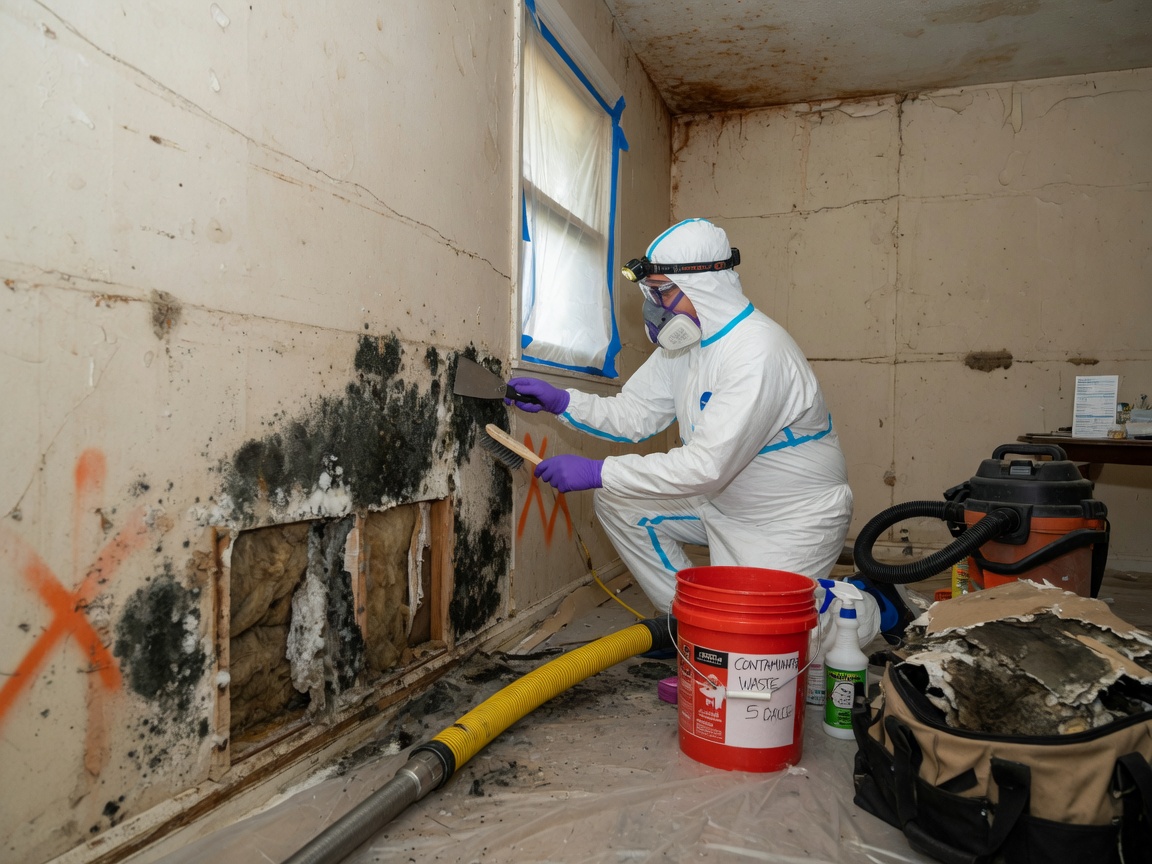
The housing itself adds to it. Knob-and-tube wiring, plaster over lath, original sash windows and additions built across several decades leave plenty of cavities that trap moisture behind wallpaper and paneling, and plenty of flashing transitions where water enters. Growth behind finishes is more common here than visible surface growth, so moisture mapping leads the investigation.
Because these houses have been damp for a long time, structural findings come with the territory. Soft sill plates, decayed joist ends and subfloor delamination show up regularly, and wood-destroying organisms often have a history alongside the mold. All of it gets documented with readings and photographs before any scope is priced.
Around Allendale
We regularly work near:
- 📍Hearne Avenue
- 📍Milam Street
- 📍Texas Avenue
- 📍Cross Bayou
- 📍Allendale Historic District
Mold Remediation in Allendale — Local Notes
- •Low elevation near Cross Bayou puts the water table close to the surface, so crawl spaces stay wet far longer than elsewhere in Caddo Parish.
- •Standing water under pier-and-beam homes is common after the heavy spring rains north Louisiana receives, and mild winters never provide a drying period to reset it.
- •Pre-war construction with plaster over lath, original sash windows and multi-decade additions creates cavities that trap moisture behind wallpaper and paneling.
- •Growth behind finishes is more common than visible surface growth, so moisture mapping rather than visual inspection leads the assessment.
- •Long-term dampness makes soft sill plates, joist end decay and subfloor delamination frequent findings, often alongside a wood-destroying organism history.