
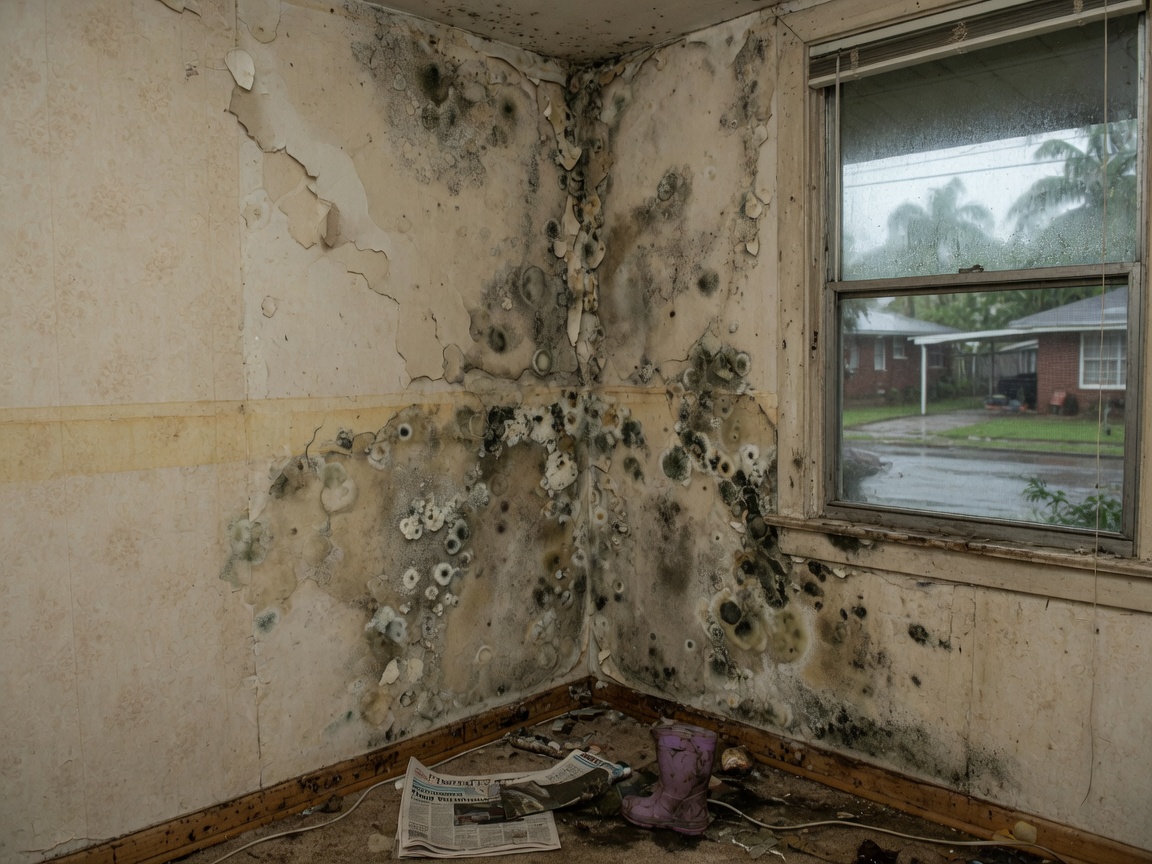
Caddo Heights occupies the higher ground above downtown Shreveport, between Queensborough to the west and the Line Avenue corridor to the east. It is grouped with South Highlands in census terms, but on the ground the two are distinct: South Highlands carries the larger historic homes along Line Avenue and around Betty Virginia Park, while Caddo Heights is a denser grid of smaller pre-war and mid-century houses on modest lots. The construction is older and more varied, and the mold work reflects that. For the Line Avenue side, see our South Highlands page.
Elevation Helps — Until the Roof Does Not
The one genuine advantage here is topography. Caddo Heights sits above the flood-prone low ground near the river and Cross Bayou, so groundwater intrusion and standing water under houses are less common than in Allendale or Cedar Grove. Crawl spaces still run damp — bare soil in a climate with no dry season takes care of that — but they are rarely wet.
That shifts the dominant cause upward. Roof and envelope deferral is what produces most of the mold found in this neighborhood: patched roofing carried for an extra decade, aging flashing at chimneys and the additions these houses tend to have, failed or undersized gutters, and soffit and fascia rot that lets water into the eaves. Water enters high, travels inside the wall cavity, and surfaces as staining on a lower wall or ceiling well away from the entry point — which is why tracing the path matters more than treating the mark.
Older Construction, Hidden Growth
Plaster over wood lath in the pre-war houses and layered wallpaper, panelling and multiple repaints in the mid-century ones all conceal cavity growth effectively. By the time staining shows on the finished face, the cavity behind it has usually been damp for a long time. Moisture meter readings across the wall, worked back toward the source, find it; visual inspection does not.
Small lots and close spacing bring a practical constraint too. Equipment is carried in rather than driven in, side yards are narrow, and containment has to be planned around a single access route. It adds setup time compared with the newer subdivisions further south.
Rental and investor-owned property is more common in Caddo Heights than in South Highlands, which tends to mean deferred maintenance and mold reported late — often at turnover or after a tenant complaint rather than when the leak started. Documentation per property matters for owners managing several houses in the area.
Around Caddo Heights
We regularly work near:
- 📍Caddo Heights Park
- 📍Hattie Perry Park
- 📍Linwood Avenue
- 📍Mall St. Vincent
- 📍Hollywood Avenue
Mold Remediation in Caddo Heights — Local Notes
- •Higher ground above downtown means groundwater intrusion and standing water under houses are less common here than in Allendale or Cedar Grove — though bare crawl space soil still runs damp year-round.
- •Roof and envelope deferral is the dominant cause: patched roofing, aging chimney and addition flashing, failed gutters, and soffit or fascia rot letting water into the eaves.
- •Water entering high travels inside wall cavities and surfaces well away from the entry point, so the path has to be traced rather than the stain treated.
- •Plaster over lath in pre-war houses and layered wallpaper and panelling in mid-century ones conceal cavity growth until it is well established.
- •Small lots and narrow side yards mean equipment is carried in and containment planned around a single access route, adding setup time.