
Springlake and the adjoining University Terrace area sit in southeast Shreveport between Broadmoor and Ellerbe Woods, close to the Red River and the Red River National Wildlife Refuge. It is the second highest-income part of the city, and the housing is a transitional mix: substantial 1960s through 1980s homes on established lots, alongside a significant rental and apartment stock serving LSU Shreveport, which is a commuter campus.
Two Different Problems in One Neighborhood
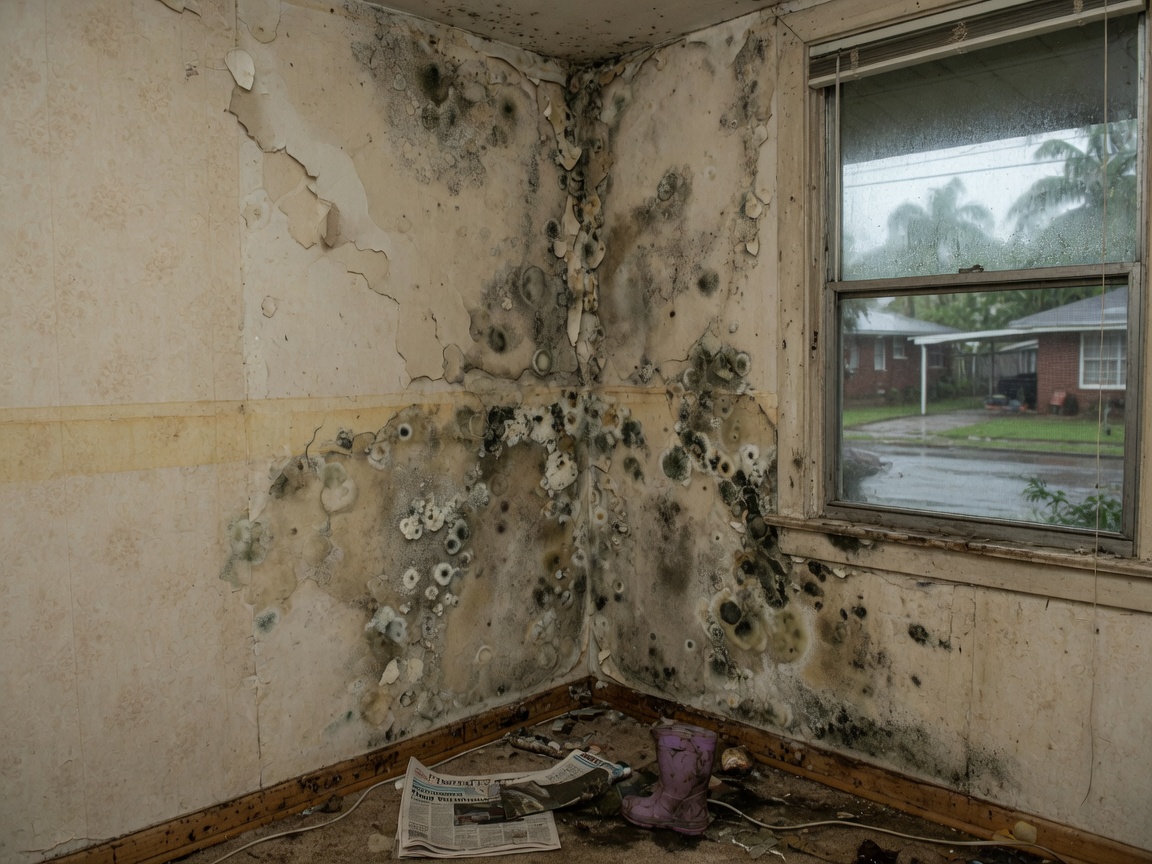
The owner-occupied housing here is old enough to have had roofs replaced, systems changed out and additions built — and those transitions are where water gets in. Re-roofing over an existing addition leaves flashing details that work for a decade and then do not. HVAC changeouts frequently leave an oversized system behind, because replacing like-for-like perpetuates whatever sizing error was made originally. And homes of this era often have original single-pane windows in some rooms and replacements in others, producing condensation on the cold units in winter and growth on the sills and the drywall beneath them.
The rental and multifamily stock produces a completely different pattern: mold found at turnover, in units that sat vacant through a Louisiana summer with the thermostat set high and the windows closed. That is enough on its own to grow mold across drywall, closet walls and furniture backs with no water intrusion at all. Owners and managers here generally need fast assessment and per-unit documentation rather than one building-wide report.
River Proximity and Drainage
The low ground toward the Red River and the wildlife refuge holds groundwater higher than the rest of southeast Shreveport. On lots where grade has settled toward the house — common after thirty or forty years of landscaping changes — surface water runs to the foundation and stays. Where those homes sit on piers, the crawl space soil never dries; where they sit on slabs, moisture wicks at the slab edge and shows as baseboard staining and flooring damage.
Established tree canopy adds the same complication seen further south: shaded roofs that dry slowly, and gutters and valleys that pack with debris and back water into the sheathing.
Around Springlake
We regularly work near:
- 📍Red River National Wildlife Refuge
- 📍LSU Shreveport
- 📍University Terrace
- 📍East Kings Highway
- 📍Red River
Mold Remediation in Springlake — Local Notes
- •Second highest-income area of Shreveport, with substantial 1960s-80s homes alongside significant rental and apartment stock serving LSU Shreveport.
- •Decades of roof replacements, HVAC changeouts and additions have left flashing transitions and perpetuated oversized system sizing — the two most common failure points here.
- •Mixed original and replacement windows produce winter condensation on the older single-pane units, with growth on sills and the drywall beneath.
- •Low ground toward the Red River and the Red River National Wildlife Refuge holds groundwater high, and settled grade sends surface water to foundations.
- •Rental turnover produces mold in units left vacant through summer with the thermostat high and windows closed, requiring per-unit documentation for owners and managers.